Pages

Sunday, 6 November 2022

Glass music by Julia Protkova. TEXT of the Exhibition. Part II. 13-33.

EXHIBITION Glass music by Julia Protkova

TEXT Part I

13. Cities from Nuremberg Chronicles 1493

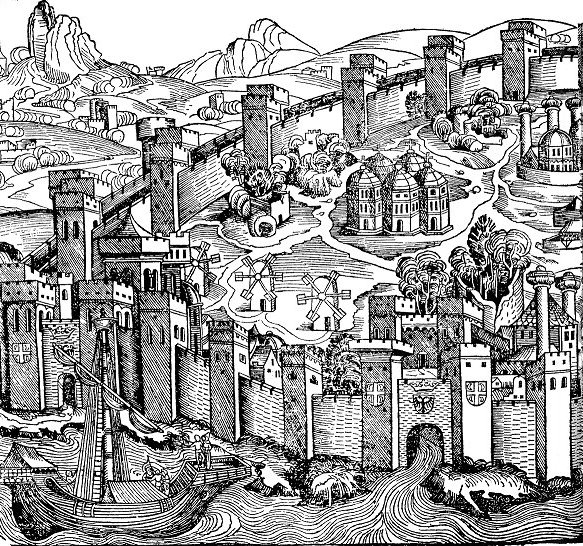
In front of you is a series of cities from one of the first books printed in Europe - the Nuremberg Chronicles of 1493. This is a stunningly beautiful book with a large number of illustrations that are waiting to be made in glass. The work was done by placing glass powder particles with the help of a needle. Each work of this size takes about 70 hours to make. I love to replicate my work. I use different shades of glass and it gives different musical effects. Sometimes, it seems to me that I hear every particle of glass powder in my works.

14. Series My Van Gogh.

My Van Gogh series is the result of my admiration for Van Gogh's work. There are already five works in my collection. Van Gogh is not just an idol for me. He is believed to have had bipolar disorder, and in being bipolar myself, I feel more attuned to him. The leftmost work is called Irises. Inspired by Van Gogh. I call it the Bipolar Disorder Study. I worked on it for seven months, once a week. The year was 2018. It was the fourth year of my worst depression. At that time, I only had the strength enough for one day of glasswork. When working on this piece, I suddenly started to have glassy thoughts. I haven't had any in four years. It was incredible. I could think of glass again. And I began to come to life. I began to have strength again. The end of Irises marks the end of my depression.

Irises 2022 and Starry Night are made using my relatively new technique, which I have just begun to explore. This material is a glass medium-sized frit. Pay attention to the shimmering effect of the Irises.

Van Gogh's work Road with Cypress in my interpretation is called the Pilgrim's Road. This work is about me, I am the pilgrim who goes home and tries to tell people about how beautiful our Universe is. I love the Road but my home means a lot to me too. I am on my way.

Van Gogh's The Courtesan is based on a painting by the Japanese artist Eisen. In my interpretation, she is called a Geisha, I changed the color of the kimono and added a few creative touches. It is known that Van Gogh was a fan of Japanese art and I share this passion.

15. Series My sailing ships

I am in love with sailing ships. I am enamoured by their shape and form and mesmerized by their beauty. The stained-glass project Scarlet Sails was made in 2004 and has a secondary name of Faith Through the Storm. This is one of my very first stained glass works. The Sky, sun and sea are cut from the same piece of glass. In 2019, I decided to repeat the same design. This work is called Flying Ship, it flies from the night to the sun. Made under the direction of Rock Laplante. I asked permission to put Rock's name on this work and he didn't mind.

And there is another sailing ship made in powdered glass. This is Admiral Nelson's flagship.

The series of sailing ships will definitely be continued.

16. Bouquet (2010)

This work is called Bouquet. It was created in 2010. This is one of my first fusing experiences. The work was created from a drawing by Marc Chagall.

17. Geisha and giraffe (2013)

Geisha and giraffe work is my reflection on human perception and thinking. If I put a miniature geisha and the tallest animal in the world in the same picture, and make the geisha taller than the giraffe, what do you imagine? A giant geisha or a baby giraffe?

18. Leo (2010)

Mosaic Leo was made in 2011 and is my very first mosaic. For me, this is a very important project. I tried to create a portrait-like image of a particular person, in this case it was my teacher in postgraduate school. He means a lot to me. I owe him my development as a person. He opened the Arctic and the World for me. His name was Leo. I placed a medieval Leo (lion) in a very intricate environment. You see a space that is very complex in color and dynamics. Leo has the incredible fortitude and charisma to get through this enclosed space. You can see the portals opening.

19. Alien Cat (2021)

If in the previous mosaic my hero was a medieval lion who suddenly appeared in an ultra-modern space, then the Alien Cat is my vision of an otherworldly self. Let me read to you what I wrote on this work. This work is called Alien Cat (Attempt #3). This is a re-creation in glass of self-portrait by Yayoi Kusama (2009) that uses a different color scheme. Yayoi Kusama is my role model, my guiding star and my inspiration. I admire her talent and her passionate dedication towards art. This work is a tribute to her. This is my third attempt to re-create this Cat. I hope for success. Glass work and technique by Julia Protkova. 2021.

20. My Escher

Maurice Cornelius Escher is a person I greatly admire. To date, I have created four recreations of Eschers - two in powder and two in stained glass.

The Fish Fantasy on your left is a glass reproduction I created in 2021 of an Escher work called Fish and Scales which is a black and white woodcut. In my work, I introduced color. Recreating Escher's work in glass is a complex process. It takes almost a hundred hours to complete a 25 x 25 cm piece. But, it's very interesting.

The most recent work - completed in October 2022 - is called Chameleon Love. Again, this is a recreation of the woodcut titled Stars. In my work, the main premise is set on the Chameleons, while the stars are just decorations for my thoughts. Let me read to you what I wrote at work.

This work is called Chameleon Love. This is a re-creation in glass of the woodcut Stars by M. C. Escher (October 1948). I changed the color scheme of the work in order to highlight my idea. For me, this work is about the Love of two beings who are close in spirit and who are able to adapt to each other's characteristics in such a way that they are able to coexist in a narrow space. Glass work and technique by Julia Protkova. 2022.


21. Divine Creations

The next three works are my thoughts on God and his divine creations. The Mosaic Broken Infinity - these are my thoughts on the fragility of human civilizations, the change of Gods. This work was planned for several years as I collected shades of blue glass for it. Once upon a time superhumans lived. They could fly and communicate with their thoughts. They were given the Higher Knowledge. And suddenly, in an instant, their civilization collapsed. A new civilization came to replace it, with new gods. But the Higher knowledge was lost. Numerous fragments remained, but no one has yet been able to read them.

The work Six Days of Creation is a glass recreation of a picture from a 12th-century German manuscript. I created this work in six days. Every day, I made only one circle - one day of Creation. It was a very interesting creation experience. This work is the beginning of my series of works on the Creation of the World. I am extremely interested in this topic.

The work Insight on Love will show you a picture recreated in glass from the Spanish manuscript of Beatus. I am in love with medieval manuscripts in general, and Beatus in particular. I dream of creating a whole series of works based on Beatus. In front of you, you see Adam and Eve. They didn't just sin but have also known love. I think this is a very interesting angle.


22. Musical Improvisations (2004)

In front of you is a musical wall. These are the works in which I tried to embody specific music or write my own. The first three stained glass works are called Musical Improvisations and were made in 2004. This is my very first experience of transmitting music into glass. I used my sister's design to create these stained glass works, but the glass that I chose was inspired by my favorite music. The first stained glass piece is called The Winter's Tale and it's a waltz from Tchaikovsky's The Nutcracker. The second work is Jazz, inspired by the song Summertime performed by Ella Fitzgerald and Louis Armstrong. And finally, the third stained-glass piece is called Tango - this is sensual-passion music.

23. Musician (Glenn Gould). (2014)

This work is called The Musician. This is a silhouette portrait of Glenn Gould, the famous Canadian pianist. I’m in love with his performances. His performances of Bach and Beethoven's sonatas have been playing in my glass shop for years. I listen to his music over and over again. At the time when I was working on this portrait, I was listening to Beethoven's sonatas that were performed by Glenn Gould. Thus, the color of the work is my vision of Beethoven at that time. There is no piano here. There is a Musician sitting in his favorite chair making magical music.

24. My own music and dance (2021-2022)

In front of you are three works - these are my own music and my own dance. The first work was done with glass powder. It is called Symphony number one and there are about 80 color shades and melodies of glass. This is my first attempt at composing fused glass music in 2021. This is the very beginning of my many works of my own music. This is how I see and hear. The next work is called My Caprice, created in 2022. It suddenly occurred to me to create it and I put aside all other projects to work on this. The next work is called Flamenco by Julia Protkova. I am the one dancing the flamenco. Inspired by a recent trip to Spain and Andalusia which I have dreamed about visiting for fifteen years. This work is the reflection inspired from my amazing trip. If you look closely, I have a red spot instead of my face. It means that I am tired, out-of-breath and flushed from the dance. This is the work of 2022.

25. Takeoff. (2021)

Takeoff was created in 2021, almost immediately after my father passed away. I lost a Teacher and someone I was spiritually close to. This is sorrowful music. The whole work is deeply symbolic. Each color represents my father's main hobbies - a philosopher, a professor and an avid fisherman. You can see the Globe slowly rising up from the surface. This is the ascension of the Soul.

26. My Bestiary (November 2012)

I have already shown you a lot of works made by me from glass powder. I've been trying to tame powder for four years and I wasn’t happy with the results. You can see here my very first works in my own technique of drawing with glass powder, created in November 2012. This is my medieval zoo. I love medieval manuscripts in general and bestiaries in particular. This is an endless series. I timed the opening of my exhibition to the day of November 15, on this day ten years ago the first ten works were fused and it was a success for me. I love my bestiary very much.

27. My Grotesques (2013-2014)

Here is another endless series - Grotesques. These are also recreations of pictures of medieval manuscripts. I am fascinated by these medieval drawings. These are examples of unbridled fantasy. These works span 2013-2014.

28. My Tigers

The leftmost tiger is called the Beast. This was my very first fusing experience back in 2008. It is based on a calligraphic drawing by the Sudanese artist Hassan Musa. I love my Beast. The other two tigers were made in 2013 and 2021. This is my recreation in glass of the same photograph of a tiger. I was interested to see how I grew. Both works are made with glass powder.

29. Eyes (2014) and Eyes of depression (2022)

The project called Eyes is two plates made in 2014 that are based on a drawing by Daniel Hopfer from 1515. I made my own color interpretation. I didn't know back then that I was bipolar. In 2022, I repeated the same design and called it Eyes of Depression. I will read to you what is written on the work. This work is called Eyes of Depression. This is a re-creation in glass of the grotesque by Daniel Hopfer, created around 1515-1520. I changed the color scheme of the original. This work is meant to remember the darkest period of my life - four years of endless depression. I did not know how to live my life after being diagnosed with bipolar disorder. I lost myself. I became afraid of people. I had to re-learn how to live. Glass work and technique by bipolar artist Julia Protkova. 2022.

30. Works created in manic state (end of 2014)

Here are two works that were created in a feverish manic state a month before my hospitalization at the mental hospital. I already understood that something was wrong with me and these works are a reflection of those days. The first is called Samurai Girl and Sunflower. The samurai girl is a drawing of my sister, given to me with the written words, “My sister is a warrior”. That is, I, a samurai girl, barely able to keep my balance on the falling sunflower petals. And the second work is called The Burning of the Library of Alexandria. You see me, an owl, crying over the loss for humanity. This was my state-of-mind during those days.

31. Owl (2021) and Thousand Flowers (2013)

Here is another Owl, created in 2021. The next work is called Thousand Flowers and is a very fine recreation of the famous tapestry from the Lady with the Unicorn series. It was created in 2013 after long hours of work.

32. Great Magicians

These three projects come from different source material but are united under my series, Great Magicians. Prophet Elijah is the recreation of the XVII century Greek icon. The image of Hermes Trismegistus is taken from an alchemy book (1624) and the image of Merlin is my interpretation from the Disney film animation Sword in the Stone.


33. Angel with golden hair (2013), plates Star (2020) and Galaxy (2020)

Angel with golden hair is a recreation in glass of the XII century icon that bears the same name. On the right you see a pair of decorative plates called Star and Galaxy. This concludes the second part of the exhibition.

Glass music by Julia Protkova. TEXT of the Exhibition. First part. 1-12.

EXHIBITION Glass music by Julia Protkova

1. Introduction

Hello. Welcome to the exhibition Glass music by Julia Protkova. For your convenience, the exhibition is divided into three parts. The first contains my key signature works. They are enough to show my range and skill level. If you want to delve deeper into my music, the second part of the exhibition is at your service. The third section will show you my latest developments and ideas.

There is a guided tour in English. The story about the works in Russian is located in the audiolink under each work.

2. Red dot. 2015. Mosaic. 60х60 см

Mosaic Red Dot was created in 2015 immediately after three months in the mental hospital. My whole life collapsed, I was diagnosed with bipolar disorder and I did not know how to live on. And then I remembered myself. Young, strong, brave and beautiful. The mosaic was made from a 1990 photograph, where I am 25 years old. I am sitting on the shores of the Arctic Ocean and smoking the strongest Russian cigarette Belomor. These are the years I worked as a geologist in the Russian Arctic on the New Siberian Islands, from 1987-1991. I am dressed in an expeditionary jacket with my hair a little messy deep in thought. And this thoughtfulness, I carried throughout the years. The red dot of the cigarette burns - this means that life goes on.

Although this work was created in a moment of despair, it is a very life-affirming work. Let this woman be your guide to this exhibition today.

3. Sunrise Flower. 2010. Витраж. 60х60 см

When I was creating Sunrise Flower in 2010, I did not know what the design would be. I had been living in Montreal for two years with my son, returning late at night after work and continuing to work on my stained glass. I was torn between glass and my son. But my son has been and remains my greatest support all these years. This is a very difficult stained glass work. And so I, blindly, intuitively, moved from the center of the piece to the edges. If you focus your eyes in the center, you will see the illusion of volume, but if you look at the edges, you will get the feeling that it is spinning. This stained glass is my emblem, my logo, my calling card.


4. Ornamental Fantasy. 2011. Stained glass. 84 см х 124 см.

Ornamental fantasy is my largest stained glass work. In this work, I played with the illusion of volume. If you look at the sphere, you will see numerous axes of rotation, that is, visually the sphere is spinning in different directions and in different planes. I wrote a short explanation for this stained glass work. There are small cubes flying in the sky. They represent the human souls and other pieces of the Universe. They are flying in the sky and sometimes falling to the earth, forming a beautiful ornament consisting of human lives.

In this ornament one can see different orders and various patterns. They represent different human connections and different life paths. Souls are leaving from the earth and returning back to the sky and in time they will fall back down. This is the process of reincarnation, the process of a continuous life cycle in the Universe.

5. Glass Herd of Durer's Rhinos

There are four rhinos in front of you.I call them Glass Herd of Durer’s Rhinos. . This is Albrecht Dürer's famous engraving called Rhinoceros, created in 1515 and re-created in glass. Interestingly, Dürer never saw a rhinoceros, this drawing is a figment of his imagination.

In 2012, I made the mosaic you see on the left, which I called Ways of Imagination. I wanted to come up with a colour scheme for the Rhino. This is a very fine, detailed and intricate mosaic in which I used rare pieces of glass. This work is a hymn to the genius of Dürer and a hymn to coloured glass. On the right, you see three rhinos made with a technique called fusing. All three works are created with a needle and glass powder. This is my own technique that I came up with, I work with and I continue to further develop. But Dürer's Rhinos stand apart in my glass work. This is the pinnacle of my technique, this is Everest, just so that you understand the significance of these works for me. Why did I make three rhinos? Starting with the first, I realized that I could not accurately reproduce Dürer's masterpiece. By doing the second, my skill had grown, but the third is the most accurate reproduction. These three Rhinos took me a year to complete. There is a movie on my YouTube channel about the creation of the Glass Herd of Durer’s Rhinos

6. Harmony of the World. 2006 - 2008. Stained glass. 110 см х 150 см

The works on this wall will tell you about me. I am a self-taught artist. In 2003, I attended a two-day stained glass workshop. And so, my new life began. I fell in love with colored glass and was captivated. I lived in Calgary back then, worked as a research scientist and was an expert in electron microscopy, but the glass was slowly but surely crowding out everything else. I started making very complex and very ambitious stained glass projects with little to no experience, but with a great desire. In those days, I only made stained-glass works.

In 2006, I conceived a stained-glass work called Harmony of the World. Our world, unfortunately, is far from harmonious. Is harmony possible? Is a world without hatred, based on tolerance, possible? It was while working on this stained glass piece that I realized that I wanted to become a glass artist. I believed in myself and in my talent.

Every color, every detail in this work has a symbolic meaning. I wrote a meditation for this stained glass work. It is this piece that inspired someone to write music that you can hear on my youtube channel.

Harmony of the World was invented and cut in Calgary in 2006-2007, but was only able to solder it in Montreal in 2008. Against the backdrop of the starry sky, Harmony is dancing. I am an idealist, I dream that the world will become kinder.

8. God the Geometer. 2012. Powder fusing. 19 cm x 24 cm  and Homo Explorer. 2019.  Powder fusing. 25 x 31 cm

God the Geometer was created in 2012 and is a recreation in glass of a 13th century medieval manuscript picture. For me, this work is priceless. This work is my personal icon, a witness to my life's twists and turns, my joys and tears. It is made with multicolored glass powder using my own technique. God the Geometer was one of the first works in my newly emerging technique. Looking back, I understand that it was a very brave step - to aim for such a high level of work, when the technique was not yet fully developed.

On the right, you see a kneeling pilgrim who has found a loophole and is listening to the Universe. This work is called Homo Explorer. This piece is again made using glass powder, 7 years later in 2019 where you can see the technique is much more refined. This work is my own color interpretation of the famous Flammarion engraving made in 1888. I see myself here, I am the pilgrim. I show these two works together because they complement each other. See? The pilgrim saw God the Creator. He hears.

9. My Soul. 2021. Powder fusing. 33 см х 43 см

First, let me read to you what is written. Hello. My name is Julia Protkova. I am a Russian-Canadian. I am 56 years old.You see my hands as a 55 year old woman who is a glass artist. You see me a a 7 year old girl. This is what my Soul looks like. My Soul loves coloured glass, my family and the World at large. I want to color the World with my glass. Hello World. Nice to meet you. This work is called My Soul. This work was made using my technique called drawing with glass powder. August 2021.

If you pay attention to the hands - the contour was applied on the back of the glass. That is, my right hand is on your left, and my left hand is on your right. We can say hello and greet each other. However, My soul is fragile and has the look of a seven-year-old girl with a stubborn look.

Why did I do this project? I understand that I am a grain of sand in our World. But I want to create large glass projects and will show you my ideas at the end of the exhibition.

10. Aelita. 2015. Mosaic. 60 см х 60 см

We started this exhibition by looking at my mosaic work called Red Dot. The mosaic Aelita was created at the same time. If in the Red Dot I desperately thought about how to live on, then Aelita is my impressions of myself going crazy before entering the mental hospital. That is, Aelita dances a crazy, unrestrained dance. For the first time ever, I used other materials, not only glass. There are computer disks, beads and wool. That is, Aelita is a study of my madness.

10. Divine Beauty. 2004. Stained glass. 150 см х 50 см. Passion. 2021. Stained glass. 29 см х 70 см

You can see two of my stained-glass works. The lower one is called Divine Beauty and was created in 2004. This is one of my first stained glass works. It's not technically perfect, but it's aesthetically beautiful. I have spent endless hours contemplating my stained glass works including this one. There is a story associated with this piece. In the winter of 2006, our house caught fire. I remember my shock when I entered the burnt house and saw the burnt wall and the broken window in the kitchen where my Divine Beauty was hanging without a single scratch.

The Stained glass piece called Passion was created in 2021. This is my exploration of the feeling of passion and my passionate obsession with glass. Since 2016, I have been making my stained glass works under the guidance of a professional, Rock LaPlante. Rock teaches me the secrets of stained glass art and I am immensely grateful to him for this. Each color in the stained-glass work Passion is symbolic. For example, the ash-dark frame signifies emotional burnout, the glass background with raindrops represents my tears on the stained glass path. But in general, my passion is a delightfully wonderful feeling.

11. Flow (2014) and Prayer (IX-2022)

The stained glass piece called Flow was created in 2014. I had a very busy day, I was overstressed and could not fall asleep. I had a small stained glass work made in 2009 that I called Frozen Flower, which you can see in the center. And so at night I came to my glass workshop, put Frozen Flower on the desktop and cut the entire stained-glass piece in a few hours. I didn’t have any design in my head at the time, it was pure impromptu. I really like it for its conciseness and movement

The work Prayer is a conceptual work. It was conceived suddenly and created in September 2022. The prayer is addressed to God the Geometer - the Creator of the Worlds. I often turn to God in my works. I have no doubt that there is a Supreme Intelligence in the Universe. I am convinced that we know very little about the world around us. The work Prayer has undergone numerous changes in ideas and design, and as a result turned into a piece of the starry sky. This work is not like any of my other works, although I have created several works with starry skies. Despite the randomly scattered constellations, there is a Higher Order here. It is not visible, I deliberately hid it, but it is there. There are Beacon Stars here that form the structure and Curtain Stars that hide the structure. There is a movie on my youtube channel on how I created this work.

12. Dance of the Universe. 2014. Fusing. 122 см х 183 см

In front of you is my largest work created in the fusing technique. This is very important work. This is the scheme of the Universe as I see it. I am convinced that everything consists of music. If you look at the sun from the left, you will see a ray that reaches the rhombus and triangle. This is the Beginning of Everything. If you look at the rhombus and the triangle, you will see how they begin to change and intensify as new colours are added to them. This is a dance. This is the dance of the universe. The lower right quadrant looks like an abstract painting, but it's not. If you look closely, you will see a map of the world. This is a tectonic map of the world, which I laid out with tweezers grain by grain. I graduated with honours from the geological faculty of Moscow University. That was in 1988, a very long time ago. But it shaped my worldview. For me, this map is like musical notes. After all, our Earth is alive, it breathes, it sounds. In the upper left corner you see God. I am convinced that there is a Supreme Intelligence in the Universe. The rest of the space is filled with a starry sky - these are stars and galaxies, which also consist of music. Above the tectonic map on the right, above Russia, there are two polar bears - these represent my years of work in the Russian Arctic and a lullaby from a Russian cartoon, which I sang to my son. On the left side, above Canada, are the figures of a seated woman and a boy standing on one arm. This is my son and I. I am thinking and my son is dancing. That is, in the center of my Universe - my son and I. And all around us is music.

On this wall is another picture - this is a magnified view of a detail in the Dance of the Universe - exactly the scene where my son and I are located. Pay attention to the glass particles from which the Dance of the Universe is made. It was my first time working with this material and I was delighted with it.

This is the end of the first part of my exhibition.

Monday, 28 June 2021

Glass Herd of Durer's Rhinos. 2020-2021 + 2012

It is with great pleasure that I would like to show you my project called Glass Herd of Durer’s Rhinos. I made a movie where I told the story of the creation of my Rhinos. There are actually two movies:

  • You can see the English version here (with English and Russian subtitles).

  • You can see the Russian version here (with Russian and English subtitles). 


In this film I am showing my glass powder technique. You will see how I am working with the needle and glass powder.


Here is the Glass Herd of Durer’s Rhinos:


Rhino #1. 2020. 33x43 cm (13x17 in). Wissmach glass.


Rhino-girl #2. 2020. 33x43 cm (13x17in). Bullseye glass


Rhino-boy #3. 2021. 33x43 cm (13x17in). Bullseye glass


Mosaic Ways of Imagination. You can read about it here.


Monday, 27 January 2020

Medieval Town. 25x25cm. 2020

From time to time I repeat some of my works. I am curious to see if their will be a difference between my previous work and now. This time around, I worked on the same picture of medieval Constantinople that I did five years ago.


This woodcut is from the Nuremberg Chronicles - one of the first printed books, created in 1493.
The original woodcut is seen below.
My work tools: paintbrush and needle. With the paintbrush, I place the glass powder paste and with the needle I straighten and sharpen the lines. The story about the technique is here.


To see how the work came to be, you can watch the slideshow here.

The side-by-side comparison between my current piece (left) and the previous piece (right) is below.
You can see the rest of my medieval towns here.

Sunday, 29 December 2019

2019: Results of the Year

The year 2019 was the first creative year after four years of depression. I finally started to feel pleasure from creating with glass again. I am quite pleased with what I have created this year, so allow me to present you with the results. If you do not see the logic between these works, do not worry about it. Most importantly, I see it. This year is special because I started to experiment with glass once again. For those interested, the results of the first 15 years of my artistic career with glass and my story can be found here

Starry Night (story here). I for the first time worked with medium sized frit. The town below is done with glass powder. 
Homo Explorer (story here). It is a continuation of my work with regards to drawing with glass powder. I am quite pleased with this work. It is a very beautiful glass work. 
Sun. Stained glass. Sun, is a translation from arabic of the word “shamsa”. That is the name of the illuminated 1338 Koran decoration which is covered in gold leaf and painted pigments. It can be found in the library of Dublin, you can see it here. Both the original picture and my work are not symmetrical but close to it. I wanted to see how it would look in stained glass. I am pleased with this work. 
Ornamental Cat. Unfortunately, this work blew up in the kiln. I worked a fairly long time on it. When I saw this self-portrait of Yayoi Kusama, it shook me to the depth of my soul. 
This cat is a projection of my admiration for her. Kusama-san, is a female artist with a mental disorder. She is the richest of all female artists in the world. She is 90 years old and she works daily in her workshop. She is my role model. I decided to show you my non-fused work to illustrate how beautiful it is. It pains me that it did not work out. It was supposed to be my finest work yet. I hope to someday recreate it again. 
Flying Ship. I, with great pleasure, have made another sailing ship. The last time I made a sailing ship was in 2005. It was a long time ago… two lifetimes ago. I wanted to re-experience that feeling of making the sailing ship again. I really like sailing ships. This time, it is flying from night to day towards the sun. This time around, I worked under the wing of a professional. Rock Laplante came up with the idea of the lines in the background. I had a completely different idea from his, but I am very satisfied with how this work turned out. I managed to retain the pattern in the glass for the background. 
Road of Pilgrim (story here). I am continuing the experiments with the technique of drawing with glass powder. This time around I made non-repeating brush strokes, essentially a complex ornament. I have never done this before. I wanted to reach a point where on the painting everything is in motion, a star flickers, an angel flies in the sky, shrubs and cypress sway and the road runs. If you take a step back from the monitor, you will better see the movement. I felt very free when applying these brush strokes. In this work, there is a whole lot of me. 
Medieval Town. I really love making these works. In my blog, I have a full post about medieval towns (only in russian) here. It takes a really fine hand; it is truly the creation of a miniature. I work with a thin needle and practically count the particles of powder to create these thin lines. This is my test to see how well my hands work. I am showing the work in progress. This town will be laid upon beautiful pink glass. I am very satisfied with the thickness of the lines; they are even finer than in my work Homo Explorer. The work should turn out as fine as lace. Showing the status as of today.


Road of Pilgrim. 2019. 27 x 33 cm.

I, with great pleasure, would like to show you my latest work. It is called the Road of Pilgrim and it is inspired by Van Gogh’s, Road with Cypress and Star. This time I will try not to mix lyrics with technique and I will write two separate parts. The lyrical part is for those interested in the thoughts of the artist. The technical part is for those interested in the details behind the making of the piece.

 Lyrical Part.
The Road of Pilgrim is a logical continuation of my previous work called Homo Explorer (story here). I will remind you that Homo Explorer, is about a pilgrim who saw and heard the Unknown. He walked to the edge of the earth, found a loophole in the fabric of reality and took a glance at the Universe. Here I thought to myself, that the Road of Pilgrim is about the pilgrim returning from a meeting with the Unknown. He will be meeting with people on the road, telling of the things he has seen. What will he tell the others? Will he be able to convey his feelings, emotions and new vision? It has always concerned me how knowledge is passed on. What should I believe? Who should I believe? How do we see? How do we understand what we are told? Finally, since everyone sees the world through their own perspective, it is truly difficult to convey something without distortion. 

 Take a look at my work. It is different from the original, that is obvious. It is a portrayal of my vision of the original work. This is how I see it, do you understand? It is incredibly interesting to me. At some point in time, I was examining a photo of my finished work and was disappointed to see that it looked like a child’s drawing; naive art. I was flustered. I started to analyze how I went about creating this piece. I tried really hard. It was the first time I used this brush stroke texture. But the work is very dynamic. Try to play with the picture by looking at it closer or farther away from the monitor. You will see the effect of movement, which is exactly what I was trying to convey. I personally see it loud and clear. If you catch the desired focus point - everything is moving. A star flickers, an angel flies in the sky, shrubs and cypress sway and the road runs. 

 Why did I choose this work? For the effect of movement and the road. I feel as if I am a pilgrim on the road attempting to talk about the beauty of the world. I am meeting people on the way. Some are interested in what I have to say while others do not care. That is normal. The road itself awakens within me a sense of anticipation new, new meetings and new places. I love this feeling. I love the road. This work is a tribute to people who feel they are on their paths. May the guiding star always shine on you. 

This is my third work based off of Van Gogh’s paintings. Firstly I created Irises in December 2018 (story here), next came Starry Night in January 2019 (story here), and now my Road of Pilgrim. I think a lot about Van Gogh. He interests me very much. For those who read my blog, you know that I am a self-taught artist with bipolar disorder. My vision and understanding of Van Gogh as an artist with bipolar disorder is my own. I understand his passion for creation. I too, also dream of creating art day and night. I am grateful for the opportunity to create glass, and develop myself further as an artist. For those interested in what I have created this year (2019), there is a post, 2019: Results of the Year (here). 

I created a picture for comparison. What do I want to show with this picture? I am satisfied with the colour scheme that I chose for this piece. You see two different works on the same subject. Two different human visions. You know, researchers say that Van Gogh thought about death when creating this painting. I do not know. But I can tell you what I was thinking about. For me, it is a life-affirming work. The understanding that I am going and moving forward. Thank God I can continue to create my glass and further develop myself. During the time that I worked on Road of Pilgrim I formulated for myself my future steps. 
I created my technique of drawing with glass powder for the opportunity to create my favourite pictures in glass with maximum accuracy. In this work, I enjoyed the freedom of not having to draw accurately. I like how it turned out. I really like how the texture of this piece turned out. 

What ideas am I trying to convey? For the first time, I allowed myself some freedom in the design. I applied brush strokes of glass powder as I felt. There was no incentive to draw with precision, it was also not possible because of the difference in medium. I feel like I have progressed a step further in developing my own artistic style. 

Technical Part. 
I want to show you how I go about my work. I explain the basics of my technique here

First of all, I have never done such a texture with glass powder before. I call this texture a complex ornament. This is my first attempt, first experiment, 91 hours of work and a total of 5 firings. 

What is the texture of a complex ornament? It is the alternation between different colours of glass powder. A simple ornament would have a basic pattern such as ABABAB. A complex ornament on the other hand would have a more intricate pattern such as ABACABABAC, ABCABC or any other combination up to ten colours. 


I worked with five to ten colours at a time. The road for example is comprised of ten different colours. Each colour has its own brush to avoid any contamination with different colours. Of course, you can make do with one brush and wash it after every brush stroke… but it is more comfortable with ten brushes. Here the photo shows six colours ready to be used. To the left of the work, you see six containers with glass powder with a brush in each one. 
If you take a look at the slide show (here), the first picture shows how I drew on different areas of the piece. I would start on the sky, then the road, then the shrubs. After I have worked on different areas of the piece, the work was fused for the first time. After seeing the result of the first fusing, I increased the density of the brush strokes a tad. Finally, in one centimeter I had 4.5 brush strokes. This is a fairly fine work, let me tell you. In total, it took 91 hours to complete. I calculated that I could draw up to nine square centimeters per hour. In the slide show, the pictures are taken approximately every five hours. 

It is very important to keep track of the viscosity of the glass powder paste. More than anything, it needs to be of a similar consistency for all glass powders. I myself eyeball the viscosity, but the point is clear. If you have a paste that is too liquidy while another is too thick, and you place them next to one another, after fusing the liquidy paste will disappear to reveal holes in the work. For this piece I used a thick paste. Very thick, very very thick sour cream. This picture was made after the first fusing, as you can see, there are many holes. As a result, I increased the thickness of the paste and the density of the brush strokes. What to do with the holes? Fill them up with a new layer of paste. 
Just as well, I kept track of which powder colours I used. I only work with Bullseye glass.
Why did I need five firings? Technically, you can make do with two. First, to understand the colours and the density of the brush strokes. And the second, for the final fusing. But I had the opportunity to do intermediate fusings, it was interesting to see how the colours of the powders changed. 
I also enjoy seeing the backside of the piece. Moreover, I sign my work with glass powder of the reverse side.


Friday, 12 April 2019

Homo Explorer. Flammarion engraving in glass. 2019. 32 x 26 cm


Homo Explorer is what I called this piece. I very much like this name. I like the subject matter behind the piece; the pilgrim having reached the end of the world and having found a gap between the firmament and the earth. I was thinking about the pilgrim. To reach the end of the world, he crossed the whole earth. The pilgrim saw very much on his journey and he has a rich life experience. What is he looking for? He is searching for the Different and the Unknown. What is this, the search for God? Yes, to a certain extent. I think it is not for nothing that the pilgrim is depicted kneeling, and that in the upper left corner you can see Ezekiel’s double wheel (a wheel in a wheel) as Divine symbolism. But at the same time, it is the search for the Unseen.

What you see here is called Flammarion engraving. Camille Flammarion was the author of many scientific books. He was involved with spiritualism and was acquainted with Elena Blavatsky. Within the book titled “Atmosphere: Popular Meteorology” written by Flammarion and published in 1888, you can find this picture with the following subtext, “A missionary of the Middle Ages tells that he had found the point where the sky and the Earth touch...”. Who is the author of this engraving? Who is the author behind this idea? No one knows but it is believed that Flammarion could have made it himself. The original looks like this.

My work with the glass was divided into two parts: Part 1) I wanted to recreate this engraving within glass using my own technique. Part 2) To create my own color scheme and to apply it with the help of glass powder. The “engraving” part of this work was fairly complicated. Probably one of the most challenging drawings I have done thus far. And so I completed it by primarily working with a needle and using it to organize the particles of glass powder. For those of you who are interested in the fusing with glass powder technique, you can find more information about it here. The “engraving” part of this piece took 39 hours to complete. This is how it looks before the coloring process.
I deliberately did not include a frame around my piece. In my opinion, without a frame there is more space for the imagination.

And so, I turned over the piece and started to color it in on the reverse side with glass powder. This took another 21 hours to complete. The total time spent on this work is 60 hours.

For the first time ever, I have put together and released a video of a slide show on YouTube to illustrate the process from beginning to end.

What is new in my work? I have for the first time used a new color called “Blue Black” (104 Bullseye Glass). It gives off a blue tint before fusing and becomes Black with a shade of blue after being fused. And of course, I was doing an experiment. What would happen if I color the whole backside of this piece with glass powder? Is it possible that the work would not have turned out well? Yes, there was the risk of multiple bubbles appearing on piece which would in turn ruin the piece completely.

If you google “Flammarion Engraving”, you will find many different color schemes. I found fifteen different color schemes as well a mosaic on the subject, a stained glass piece and a woodcut. On top of all that, I also found that someone is trying to sell a version of the Flammarion Engraving that you would color in yourself as well as one that is already colored in. If you want to color in your own pilgrim, you can find it here.

As you can see in the picture, there are two completely different parts: The Universe and Our World. It is interesting coloring in this picture, especially the Universe part of it. Here you can see three different color schemes side-by-side.
I was showing these three to my friends during the making of this piece. I was interested in what people had to say when I would show it to them. The feedback was always different. And so I thought for a long time about how I see the Universe. For me, the keyword to the Universe is “Different”. I am certain the the pilgrim saw colors that he never saw before on in Our World. How to create Different colors? I chose Emerald Green, Turquoise, Lilac and Pink. I decided that the combination of these colors would differentiate from what can be found on Our World, namely the blue sky with the yellow sun and the green earth. Of course, I used many different shades. In total I used thirty different colors.

I have to say that, that this is not the first piece I did about the Universe. The thought of the Unknown has enveloped me for many years. What do you see in the picture if you single out the Universe part? It consists of a wheel within a wheel, different suns and all the while it has a multi-layered structure and rhythm. I would say that the Universe is shown as an intricate ornament. Right? Right! Does it look like music? Yes, it does! I am guiding you towards the idea of music. I believe that the pilgrim does not just see, but hears as well. He becomes a man who is listening to the music of the Universe.

I tried to convey this idea. Respectively, I wanted to draw the music of the Universe. Do you see the clouds? I colored them emerald green and this helps create the rhythm. Why emerald green? It came out of nowhere. I am absolutely serious. I initially colored the double wheel, then the sun and then I decided to color in just the clouds. And so a rhythm was born.

 Here is a photo illustrating the Homo Explorer (work in progress). I am holding a paintbrush.
The fully colored piece looks like this.

Finally, the work has been fused. The result of the fusing surprised me, but the glass piece turned out beautifully. Very Beautiful. The glass is extraordinarily smooth and almost warm to the touch. The surface of the piece has a subtle wave-like texture to it. The colors that I used turned out to be quite vivid, and the Universe looks gentle. I am very happy. This piece is spectacular. The weight of this piece is 1.5Kg, it is wholly tangible.

 The fusing of experimental glass it is always a process of interacting with the unknown. For example, I expected to see black lines when instead they turned out blue. I thought that the whole “engraving” part of this piece would have a relief to it, but instead the glass became smooth. I thought the colors would be more vibrant, but believe me, they turned out exactly how they are supposed to be. Yes. The final result is very different from what was initially planned. On the other hand, the piece did not become any worse for it. It can be said that the unknown has corrected my work, for which I am grateful for. Before you, is an example of the interaction between an artist and creative power.

Here are four different corners of the piece to illustrate the detail involved. I like the lake/river with the multiple townships, the shading of the water and the little bridge. The fact that my hand when working with the needle could accomplish such detail makes me pretty happy.

 In this photo, pay attention to the openings in the firmament, they are painted in the corresponding colors of the Universe.

 There should have been three shades of pink. I like the interaction between lilac and pink.

The space between the sun and the dark part of the night sky was supposed to be bluish with prominent white stars.
For some of you, it might be interesting to see what the backside of the “World” looks like. As you can see, there are quite a few bubbles. I could have used white glass as a base for this piece, but I wanted to especially see what happens to the glass powder when it is fused between two pieces of glass. This experiment turned into the backside of the “World”. The piece is reversible you can say. I was afraid, that some kind of bubble would break through the “engraving” part of this piece, but in the end, everything worked out.

 I cannot restrain myself, I am showing you with great pride and joy both my Irises (you can find the story here) and my Homo Explorer sided-by-side.
If you have any thoughts and opinions, you can write to me
juliartglass@gmail.com