Pages

Sunday, 30 December 2018

Glass Powder Technique

Warning. I have seen multiple notes from people about mixing aloe vera with glass powder. Though I have never seen any results that have impressed me. However, I like my results and I have never seen a finer use of glass powder.

 The technique is simple. I take some glass powder and some aloe vera gel and I mix the two. The whole point is in viscosity. The viscosity should be to the point where you are able to place it in such a way where it retains its volumetric shape. When mixing the glass powder and aloe vera, you are supposed to get a thick paste. I would like to mention that this paste will dry to a stone-like state and this is what will hold your design intact. 

This is God the Geometer before fusing. 
This is God the Geometer after fusing (2012). The story can be found here. 
Safety first. Do not breathe in the powder and be sure to use a respirator when transferring the glass powder from the main container into a smaller one. After the powder has been mixed with aloe vera, it is safe. 

What instruments do you need? You need a needle. A thin paint brush. A pencil with a rubber end (you can buy it in ceramics stores. It is used to draw on clay). You need a painting knife to mix the powder and gel. A painting knife or spoon to transfer the powder from the original container into the smaller one. Small containers (you can find them in stores where they sell beads). 

 Different glass powders have different behaviours. For example, if with one you are able to create a thin line, then with another it might be a log. What do I mean when I say thin line? Take a look at the following examples. 


Black glass powder is one of the easier ones to make lines with, but I personally like the way aventurine blue looks and feels (1140 Aventurine Blue Bullseye Glass). 


The filling in of the drawing. A very useful thing. Very carefully you create the contour of the drawing with thin black lines. Next you fill in the glass powder paste of your choice. The lines and the filling in must have a thickness of at least a 2mm. 


Make sure that it that the layout of the paste is even. You can see below what happens when the glass powder is not even. Look at the bottom left corner of Japanese Garden. 
It is very helpful to have a fused test sample of all the glass powders you have in your possession. When filling in a drawing, the glass powder paste differentiates in color from the finished product. Keep this in mind. 
Filling in without contours. I use around five paintbrushes at a time for 7-8 colours. This is a process that requires focused concentration and good hand-eye coordination. The task is to place or fill in as much as you can of the glass powder paste while it is still moist. Here is an example of Evangelists from the a 10th century manuscript in a Mozarabic style. On this photo you can see moist and dry powder. The moist powder is darker. The task is to stack horizontally, brush stroke by brush stroke, so that you get a smooth area. 


Bas-relief. This is a very interesting feature of glass powder paste and I have been using it since I started using glass powder paste (2012). Take a look at the Earth, Sun, Moon and Water and the folds of God the Geometer. 


Take a look at the four-storey construction in my tapestry in glass called Lady with Unicorn (2013).


And one more example. The feet and sandals of Prophet Elijah (2013). 


And of course when I was molding myself from Melancholy by Albrecht Durer. The story can be found here. 


A more technically difficult work was done in 2018 when I created Irises. The story can be found here. 


 Note: All of the glass powder I have used has been from Bullseye Glass. 

UPD: 28.06.2021 I made a movie where you can see how I work. English version here. Russian version here. 

 Hello, if you read this till the end and have taken a look at all the photos, this must mean we are similar in some way. Write to me if you want.
juliartglass@gmail.com


Thursday, 11 September 2014

Dance of Universe and other events).


Dance of the Universe. 2014. Fused glass. 185 cm x 125 cm (6 ft x 4 ft)

Dance of the Universe is a melody that I “hear” as an artist. On the bottom, you will see the melodic pattern that is gradually rising and moving into space. On the top left corner, you see the face of Johann Sebastian Bach, for his work of the “Art of Fugue" inspired this project. On the right side, you can see the tectonic map of Earth. Being a geologist, it’s as if I am reading music notes. I was trying to incorporate this tectonic map into the “Dance of the Universe” as an abstract drawing. This way, even with no knowledge of geology or tectonic plates the observer can enjoy the design. When I look at this map, I see the Earth alive and part of a universal melody. The wavy patterns are like lines in sheet music while the planets and the galaxies are the notes themselves. On the Arctic part of the Earth, one can see a woman staring into the night sky while a small boy is off playing by himself; this is my son and I.

It is scheduled to be presented in a Gala concert dedicated to the 20th anniversary of Montreal’s International Art Festival “Maple Leaves” on September 13, 2014. More art projects incorporating this technique will be presented at my personal exhibition on September 26-28, 2014, held by Vandart Art Gallery.


I've got an award as a Discovery of the Year from the Russian Business Community, called Prestige (or Russian Oscar) and signed Golden book of Montreal. Very busy). 


Saturday, 8 March 2014

Serious Talk. 2014.


I created a fused glass decorative plate. I call it Serious Talk :)
Fused glass. 2014. 25 x 25 cm. Frit painting. 


This is a re-creation of a drawing done by the Dutch artist Arent van Bolten. The original drawing was created sometime in the early 17th cenutry. It can be found in the collection of the Rijksmuseum in Amsterdam.

Medieval Cities.

These fused glass works are re-creations from the Nuremberg chronicle illustrations. This is one of the first printed books made in the year 1493. It has numerous beautiful illustrations of European medieval towns and cities. 

Sunset in Medieval Town. 2014. 
Fused glass. Glass powder drawing. 18 x 27 cm

I made another one as a decorative plate giving it a practical use.

Meeting Place. 2014.
 Fused glass. Glass powder drawing. 25 x 25 cm


Original:


Friday, 7 March 2014

Eyes. Set of Decorative plates.Fused glass. 2014. 25 x 25 cm.


This set of decorative plates is based on the drawings of Daniel Hopfer from the collection of Rijksmuseum  (Groteskevlakdecoratie met koppen van dieren, Daniel Hopfer (I), David Funck, 1480 –1536,  RP-P-1907-2892)

The original drawing was roughly divided into two halves thus creating two different plates. To complete the composition of each plate, additional faces were added from the original drawing.

When creating the decorative plates, I was trying to put emphasis on the eyes. They are the first thing you notice; afterwards you take in the rest of the composition. In my plates I wanted to create the illusion that the beasts are interacting with each other. Each beast has its own story to tell.


Wednesday, 15 January 2014

Medieval grotesques.


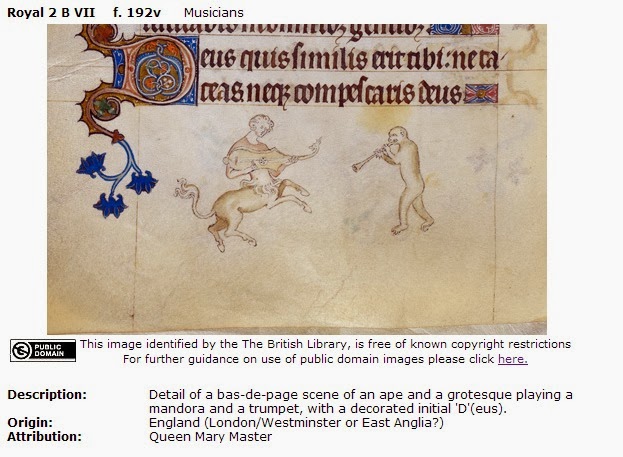
This is a series of fused glass works which are based off the illustrations from a 13th century manuscript called Queen Mary Psalter (from the British Library - Royal 2B VII).

These are drawings done by Queen Mary Master. All of them are "bas-de-page" drawings, but to me they deserved center stage. 

Lovers. Fused glass. 2014. 22 x 14 cm.  (BL Royal 2B VII, fol. 138v)


Men fighting against a dragon. Fused glass. 2014 ((BL Royal 2B VII, fol. 186v)


Grotesque-knight.  Fused glass. 2014. 21 x 16 cm (BL Royal 2B VII, fol. 141)


Musician. Fused glass. 2014. 16 x 10.5 cm (BL Royal 2B VII, fol. 192v)


Knight and snails. Fused glass. 2014.  20 x 15 cm (BL Royal 2B VII, fol. 148)


Musicians. Fused glass. 2014 (BL Royal 2B VII, fol. 193)


Grotesques fight with each other. Fused glass. 2013. (BL Royal 2B VII, fol. 136)


Musicians. Fused glass. 2013 (BL Royal 2B VII, fol. 193v.)